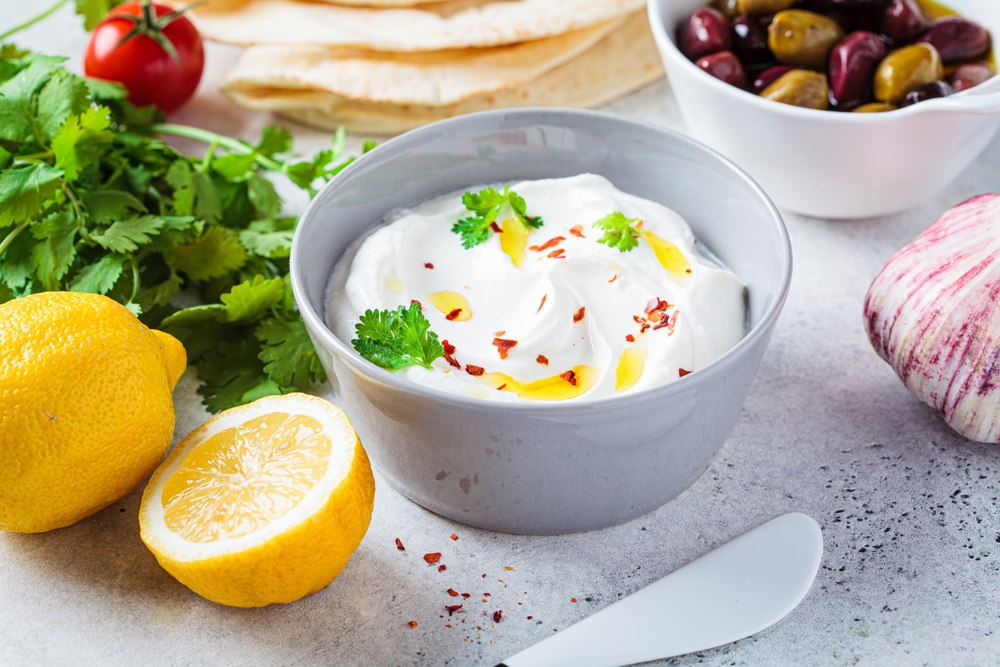
Lemon juice is used in sauces and dressings as an acidic component: it balances the fat, lightens the sensation on the palate, and brings out the other flavours more clearly. The basic ratio is 1 part of lemon juice to every 2–3 parts of oil; add the lemon juice a little at a time, and in hot sauces, after turning off the heat.
Why lemon works well in sauces and dressings
Lemon juice adds character to dressings, emulsions, and creamy sauces. Its acidity creates a contrast with the fat content of ingredients such as extra virgin olive oil, butter, egg yolks, mayonnaise, and cheese.
Fat adds smoothness, depth, and roundness; the citric acid in lemon introduces a lively note, which lightens the dish and helps bring out the individual flavours. Lemon does not “eliminate” the fat: it alters how it is perceived, creating a balance between richness and freshness. Furthermore, the sour taste interacts with sweet, salty, bitter, and umami flavours.
Lemon juice is therefore particularly well-suited for use with:
- extra virgin olive oil;
- butter;
- egg yolk;
- mayonnaise;
- fatty fish;
- white meats with skin;
- cheeses;
- yogurt, cream and creamy sauces.
One ingredient, a thousand uses in the kitchen
Lemon juice can serve various purposes within the same dish. It can provide acidity, add a citrusy flavour, thin out very thick sauces, and create a contrast with fatty, sweet, or naturally bitter ingredients.
For example, Giancarlo Polenghi’s Caraffina Limone, made from Sicilian lemons, contains pure lemon juice with no preservatives or added ingredients and is ideal for everyday cooking, where it’s important to measure the lemon juice precisely. For more sophisticated recipes, however, you can use Polenghi Spinagallo, an organic lemon juice made from the “Femminello Siracusano” variety grown on the Spinagallo estate.
Basic rules for using lemon juice properly
Here are a few simple tips that can help us make the most lemon as an ingredient in sauces and emulsions.
The goal is to bring out its freshness without overpowering the other ingredients or making the dish too sour.
How much lemon juice use and how to find the right balance
There is no one-size-fits-all measurement for all recipes, but there are reliable starting ratios.
| Culinary use | Lemon juice | Oil | Note |
|---|---|---|---|
| Mild dressing (leafy salads, raw vegetables) | 1 part | 3 parts | A light citrus note |
| Strong-flavored dishes (fish, legumes, grains) | 1 part | 2 parts | Higher acidity |
| Thick sauce (yogurt, cream, cheese) | little by little | – | Check the flavours and consistency after each addition |
The order of the ingredients is just as important as the measurements:
- dissolve the salt in the lemon juice;
- add honey, mustard, spices, or other flavorings;
- gradually incorporate the oil, using a whisk or by shaking it in a closed container.
Measuring in milliliters – rather than “by eye”- is what makes the result consistent: this is the practical advantage of ready-made lemon juice over freshly squeezed juice, whose acidity varies from fruit to fruit.
Finally, lemon juice can be added at different times, depending on the desired result:
- When used cold: it retains a fresher, more distinctive flavours;
- After cooking: it enhances the flavour of sauces and dishes without overly altering their aroma;
- During preparation: it becomes an integral part of mayonnaise and emulsions;
- Before cooking: it adds flavour to meat, fish, and other foods through marinating.
With butter, eggs, cream, and yogurt, the temperature and order in which the ingredients are added are also important. Pouring a large amount of lemon juice into a very hot sauce can cause it to separate or curdle.
Common mistakes to avoid
- Adding all the lemon juice at once;
- correcting excessive acidity by adding more oil alone;
- using the same proportions for every recipe;
- pouring the oil too quickly into emulsified sauces;
- work with sauces containing egg yolks at a high temperature.
Cold sauces made with lemon juice
Let’s look at some simple recipes you can make with Polenghi lemon juice.
The ability to measure the product directly in millilitres helps ensure precise results every time.
Citronette: lemon vinaigrette without vinegar

Citronette is a fresh and light dressing for salads, vegetables, and seafood dishes, in which vinegar is replaced by lemon juice.
Ingredients:
- 30 ml lemon juice
- 60-90 ml extra virgin olive oil
- 1 teaspoon musterd
- Salt, pepper
- 1 teaspoon honey (optional)
Preparation. Dissolve the salt in the lemon juice, then stir in the mustard and, if desired, the honey. Gradually add the oil a little at a time, whisking constantly, until the mixture is smooth. Season with pepper.
The oil and juice tend to separate when left to stand – stir again before each use.
Homemade lemon mayonnaise
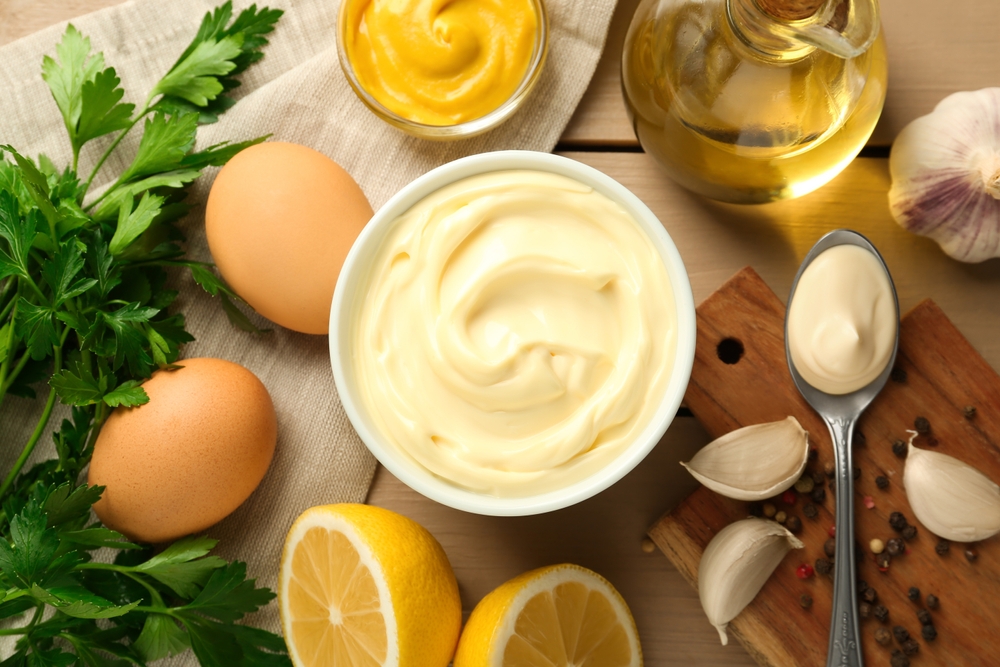
Ingredients:
- 2 pasteurized egg yolks at room temperature
- 200–220 ml vegetable oil
- 20 ml Caraffina Giancarlo Polenghi
- 1 teaspoon mild mustard
- A pinch of salt, to taste
Preparation. Mix the egg yolks with the mustard, salt, and half the lemon juice. Add the oil drop by drop at first, continuing to whisk; when the sauce begins to thicken, pour it in a thin stream and finish with the remaining juice.
If the mayonnaise separates, mix one teaspoon of lukewarm water (or lemon juice) with a small amount of the sauce in a clean bowl, then gradually incorporate the rest.
Lemon aioli
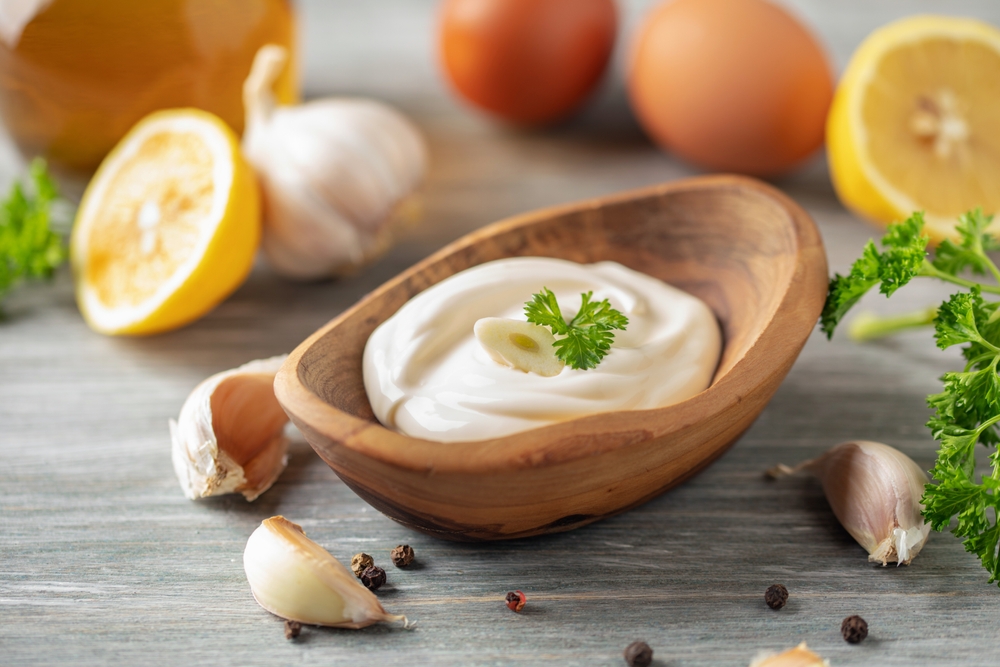
A modern version made with egg yolk, which is more stable and easier to prepare than the traditional recipe.
Ingredients:
- 1 pasteurized egg yolk
- 1 small clove of garlic
- 15 ml Polenghi lemon juice
- 100 ml seed oil
- 80–100 ml mild extra virgin olive oil
- Salt
Preparation. Grate the garlic and combine it with the egg yolk, salt, and half of the lemon juice. Slowly incorporate the seed oil, and once the emulsion is stable, add the extra virgin olive oil. Finish with the remaining lemon juice.
Yogurt and lemon sauce

Fresh and versatile: vegetables, chicken, fish, and spicy dishes.
Ingredients:
- 200 g plain Greek yogurt
- 15–20 ml Polenghi lemon juice
- 15 ml extra virgin olive oil
- 1 tablespoon chopped fresh herbs
- Salt and pepper
- Half a clove of garlic
Preparation. Whisk the yogurt until creamy, gradually add the lemon juice, then the oil, salt, pepper, herbs, and garlic. Let it rest in the refrigerator for about 20 minutes. If it’s too thick, add a little water.
The same base can also be used as a marinade for bite-sized pieces, skewers, or chicken breast: the yogurt coats the meat, while the lemon adds freshness.
For quantities, timing, and flavour variations, see the Polenghi guide dedicated to lemon marinades for fish, chicken, and vegetables.
Hollandaise sauce: lemon to balance the butter
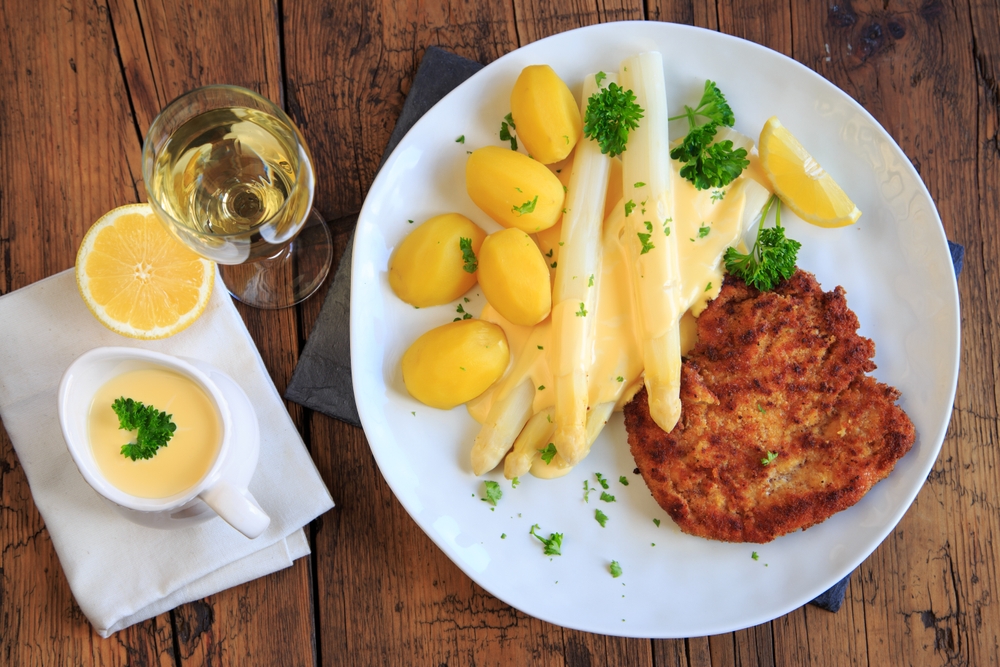
A classic French dish made with egg yolks, clarified butter, and an acidic ingredient. There are several theories about the origin of its name: according to some accounts, it derives from a sauce popular in the Netherlands; according to others, the sauce was originally known as “Isigny,” after the Norman town famous for its butter.
Ingredients:
- 2 pasteurized egg yolks
- 150 g unsalted butter, melted and lukewarm
- 2 tablespoons water
- 1 tablespoon white wine vinegar
- 10–15 ml lemon juice
- Salt
- White pepper or a pinch of cayenne pepper
Preparation. Whisk the egg yolks with water and vinegar over a double boiler, making sure the bowl does not touch the water to prevent curdling. When the mixture is pale and thick, remove from the heat and slowly stir in the lukewarm butter. Season with salt, pepper, and lemon juice.
It pairs well with asparagus, eggs, salmon, white fish, shellfish, and steamed vegetables.
FAQ about lemon-based dressings
How much lemon juice do you need for a citronette?
The typical ratio for a citronette is 1 part lemon juice to every 2 or 3 parts oil. However, the ratio can be adjusted based on personal taste and the type of dish.
Is lemon or vinegar better in dressings?
It depends on the desired result and personal preference. Lemon adds a fresher, citrusy flavours, while vinegar has a stronger, more lingering taste.
Does lemon cause milk or cream to curdle in sauces?
It can cause them to curdle, especially if added in large quantities or at high temperatures. It’s always best to add it a little at a time or after turning off the heat.
How long does a homemade lemon sauce last?
Sauces made with raw eggs or yogurt should be stored in the refrigerator in a sealed container and consumed within a few days. Citronette, which contains no eggs, lasts a little longer, but should be stirred before using it.