8 MAY 2026
Lemon marinade: the complete guide for fish, chicken and vegetables

Lemons, and especially their juice, are one of the most versatile ingredients in the kitchen. From vegetables to fish and meat, using them to marinate or season food not only adds a pleasant tangy note, but also brings out the natural flavours, making dishes fresher, more balanced and more aromatic.
When it comes to lemon marinades, however, it is important to know the timing, quantities and methods of use. Lemon juice affects fish, chicken and vegetables differently: if used incorrectly, it risks altering them too much, making them dry, mushy or excessively sour.
What happens to food when marinated in lemon juice?
Marinating with lemon juice involves adding an acidic element to food, often combined with oil, salt, herbs and spices. It is a highly versatile natural flavouring, suitable for a variety of dishes:
- Dressing for vegetables and salads: instead of the classic combination of salt, oil and vinegar, a few drops of lemon juice give salads a fresher, livelier flavour.
- Meat and fish: lemon is mainly used before cooking to add aroma and flavour. It can also be added to the finished dish to balance the richness of certain dishes.
- An alternative to reduce salt: thanks to its intense flavour, lemon adds character even to the simplest dishes, helping to limit salt intake.
- Desserts and creams: lemon juice also features in sweet dishes, such as lemon custard, which is fresh, delicate and aromatic.
But what actually happens to food when it comes into contact with lemon juice?
In the case of meat and fish, the acidity acts on the surface proteins: this is not true cooking with heat, but a transformation that makes the food more opaque, firm and apparently ‘cooked’. This is why it is essential to get the timing and quantities right. A short marinade enhances the flavour; a marinade that is too long can alter the texture, making the food mushy, dry or excessively sour
The role of citric acid: pH, proteins and texture
Lemon juice contains citric acid, which is responsible for its fresh, tangy taste. When it comes into contact with the proteins in meat or fish, this compound lowers the pH of the food’s surface, altering its colour and texture.
This effect is particularly noticeable when fish is cold-marinated: the flesh tends to become paler, firmer and less translucent. If the marinating time is too long, however, the fish can become tough, dry or flaky.
With chicken, on the other hand, lemon marinating is mainly used to add flavour and character to the meat. Here too, a marinade that is too acidic or left on for too long can damage the outer fibres, compromising the texture when eaten.
Lemon marinade for fish: timing, techniques and mistakes to avoid
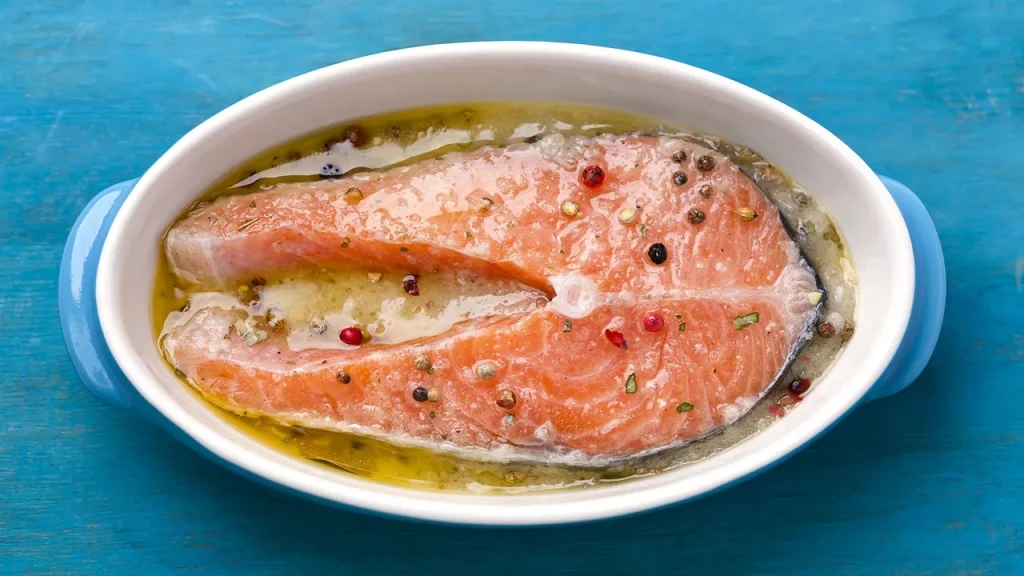
Fish is one of the most natural pairings with lemon. Its delicate flavour lends itself to fresh, aromatic and well-balanced dishes.
One example is Mediterranean-style marinated mackerel with Giancarlo Polenghi Caraffina Lemon: the intense, robust flavour of the mackerel is balanced by Polenghi lemon juice, which captures all the flavour of Sicilian lemons.
To achieve a good result, it is important to distinguish between fish intended for cooking and fish eaten raw or cold-marinated. In the first case, the lemon is used to add fragrance and flavour before cooking; in the second, it is essential to pay attention to food safety as well, storing the fish at appropriate temperatures.
How to marinate raw fish (tartare, carpaccio): how much lemon juice and for how long?
For tartare and carpaccio, lemon should be used sparingly: you mustn’t ‘drown’ the fish in juice. As a rough guide, 1–2 tablespoons of lemon juice are sufficient for 200 g of fish, to be complemented with extra virgin olive oil, salt, pepper and herbs.
The marinating time should be brief: 10–15 minutes for tartare, 15–30 minutes for carpaccio, depending on the thickness of the slices and the desired result.
For more complex preparations, longer marinades can be used, incorporating salt and sugar in an approach similar to dry marinating. Salmon carpaccio marinated with Polenghi Spinagallo and pink pepper, for example, requires at least 48 hours’ rest in the fridge.
It is important to remember that lemon marinating is not an alternative to cooking. Lemon juice alters the colour and texture of the fish, but does not automatically make it safe to eat raw. The Ministry of Health states that, if consumed raw, marinated or not fully cooked, fish and cephalopods must first be frozen for at least 96 hours at -18 °C in a domestic freezer.
Flavour variations: lemon and herbs, lemon and soy sauce, lemon and garlic
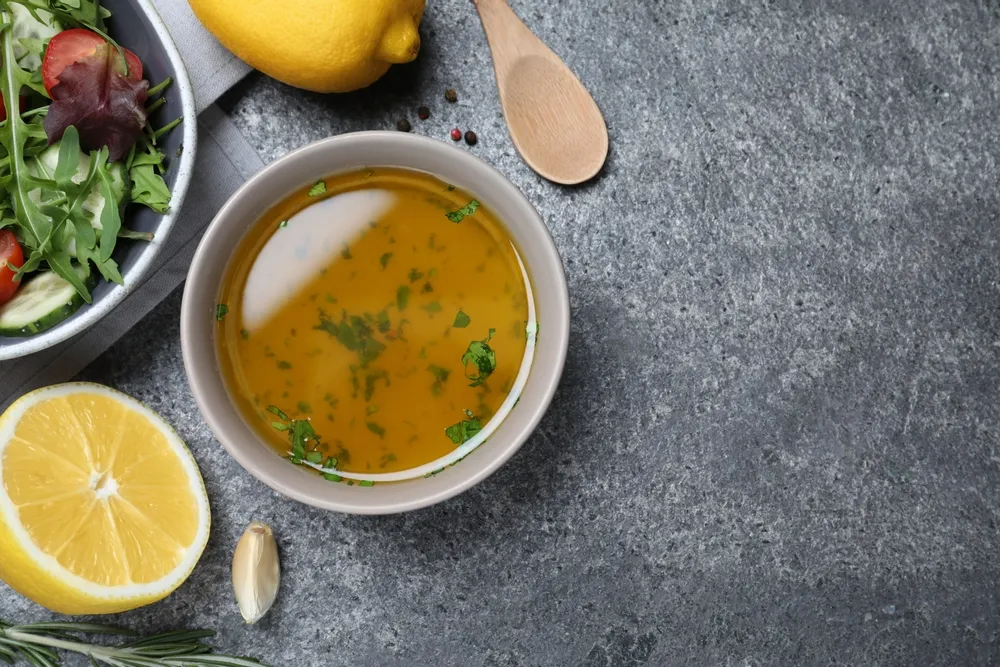
Combining herbs and spices with lemon juice makes the marinade even more fragrant. The choice of ingredients depends on the type of fish and the desired result:
- Lemon and herbs: parsley, basil, mint, thyme, fennel and marjoram pair naturally with lemon. Ideal for white fish such as sea bass, sea bream, cod and sole, and for shellfish and molluscs such as prawns and squid.
- Lemon and soy: a contemporary variation that adds depth of flavour. The lemon juice should be used sparingly and balanced with soy sauce, sesame oil, fresh ginger and sesame seeds. It works well with salmon, tuna, amberjack and prawns.
- Lemon and garlic: a more intense combination, ideal for fish intended for baking or grilling. To avoid overpowering the fish’s flavour, it is best to use a small amount or leave the garlic whole in the marinade and remove it before cooking. Perfect with oily fish, cuttlefish, squid and shellfish.
Mistakes to avoid: when lemon ‘overcooks’ the fish
The most common mistake is leaving the fish in lemon juice for too long. The acidity continues to act on the surface, risking a dry, rubbery or flaky texture. Here are the main mistakes to avoid:
- using too much juice in relation to the amount of fish;
- not adding a fatty element, such as extra virgin olive oil, which balances the flavour;
- marinating very delicate fish for too long;
- assuming that lemon can replace blast chilling, freezing or cooking;
- preparing tartare or carpaccio too far in advance.
The rule of thumb is simple: the thinner and more delicate the cut, the shorter the marinating time should be.
How to make a good lemon marinade for chicken
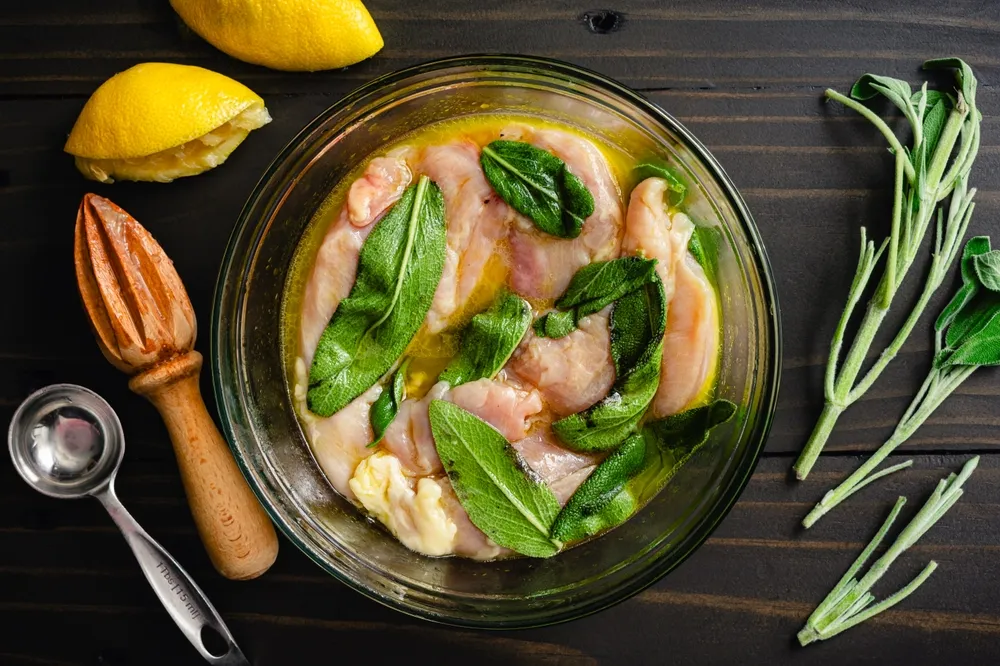
Unlike fish, chicken takes longer to absorb flavours and aromas. It should always be marinated in the fridge, in a covered container, preferably made of glass or food-grade plastic.
Lemon juice adds freshness to the meat and makes it more fragrant, especially when combined with rosemary, sage, thyme, garlic, pepper, paprika and other spices. It is also useful for balancing the perceived richness of the skin or fattier cuts, making the dish lighter and more harmonious.
Here too, it is important not to overdo the timing: marinating for too long or using an excessively acidic marinade can alter the surface of the meat, compromising its texture after cooking.
Basic recipe: lemon-marinated chicken
To make a simple and tasty lemon-marinated chicken, you will need:
- chicken breast or thighs, approx. 500 g;
- 25 cl lemon juice;
- 2 tablespoons extra virgin olive oil;
- 1 clove of garlic;
- rosemary or thyme;
- salt and pepper.
Place the chicken in a bowl and add the lemon juice, oil, spices, herbs, salt and pepper. Mix well, cover and leave to marinate in the fridge for at least 30 minutes. Depending on the size and type of cut, this can take up to 2–3 hours. Chicken breast or bite-sized pieces require a shorter marinating time; for thighs, drumsticks or larger cuts, you can leave them to marinate for a little longer.
Once marinated, you can proceed to cook the chicken in the oven, in a frying pan or on the grill. If you wish to use the marinade as a sauce or cooking liquid, it is advisable to set aside a small, clean portion before adding the raw meat. Alternatively, the marinade that has already been used must be brought to the boil before consumption.
Lemon and yoghurt marinade: the ethnic-inspired variation
A very interesting variation is the lemon and yoghurt marinade. The yoghurt balances the flavour of the chicken and, together with the acidity of the lemon, helps to keep the meat tender even after cooking. It is ideal for chicken bites, skewers, grilled chicken breast or roast chicken: the result is a creamy dish, with a protective layer on the surface of the meat that gives it a particularly pleasant texture.
To prepare it:
- 500 g chicken;
- 125 g plain natural yoghurt;
- 2 tablespoons lemon juice;
- 1 tablespoon extra virgin olive oil;
- sweet paprika, curry powder or turmeric;
- salt, pepper and thyme.
For a more Mediterranean flavour, you can use thyme and rosemary; for a spicier variation, paprika, turmeric, curry powder or cumin.
Lemon marinade for vegetables: which ones work best and how
It’s not just meat and fish: vegetables also lend themselves very well to lemon marinades. In this case, the juice doesn’t just add flavour, but also brings freshness, balance and vibrancy to the dish. It is particularly suitable for thinly sliced raw vegetables, grilled vegetables or naturally sweet vegetables, creating a pleasant contrast of flavours.
The vegetables best suited to lemon marinades are: courgettes, aubergines, peppers, carrots, fennel, cucumbers, red onions, tomatoes, mushrooms, asparagus, cauliflower and lightly blanched broccoli.
For a quick marinade without compromising on quality, you can use Polenghi’s ReaLemon, a blend of lemon juice made from carefully selected varieties, available on the website in various sizes designed for convenience in the kitchen.
Grilled vegetables: pre-marinating and recommended cooking times
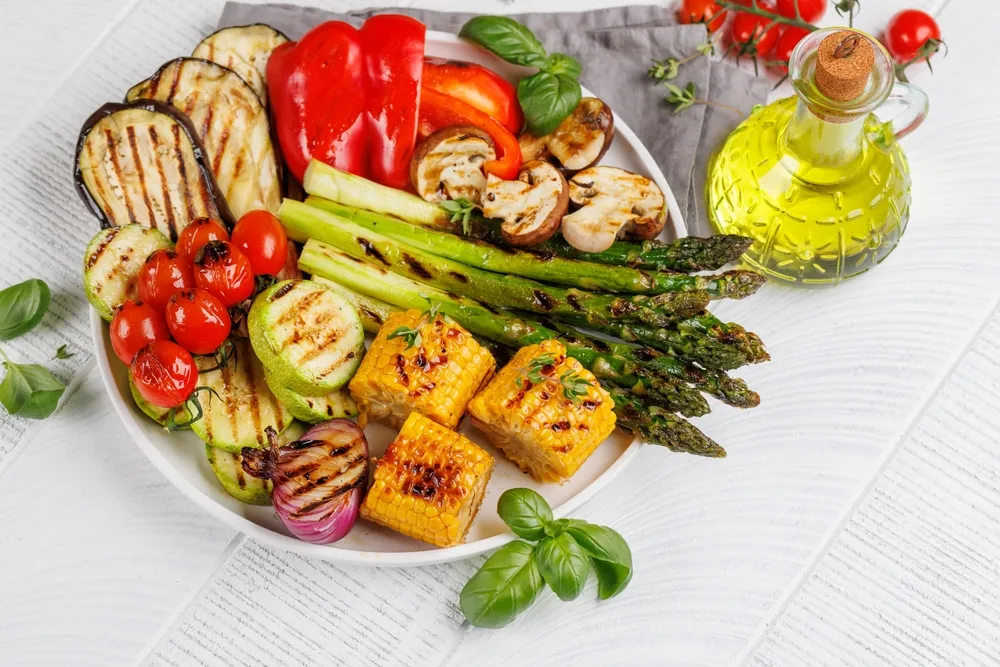
Pre-marinating is useful for firm vegetables such as aubergines, courgettes, peppers, mushrooms and onions: 15–30 minutes with lemon juice, extra virgin olive oil, salt, pepper and herbs is sufficient. The lemon adds fragrance, whilst the oil protects the surface during cooking and helps distribute the flavours more evenly.
Times vary depending on the vegetable:
- courgettes and aubergines: 20–30 minutes;
- grilled peppers: best seasoned after cooking;
- mushrooms: 15–20 minutes;
- red onions: 20–30 minutes;
- asparagus: 10–15 minutes.
Sticking to these times is essential for flavouring the vegetables without compromising their taste and texture.
Salads and raw vegetables: lemon as a dressing
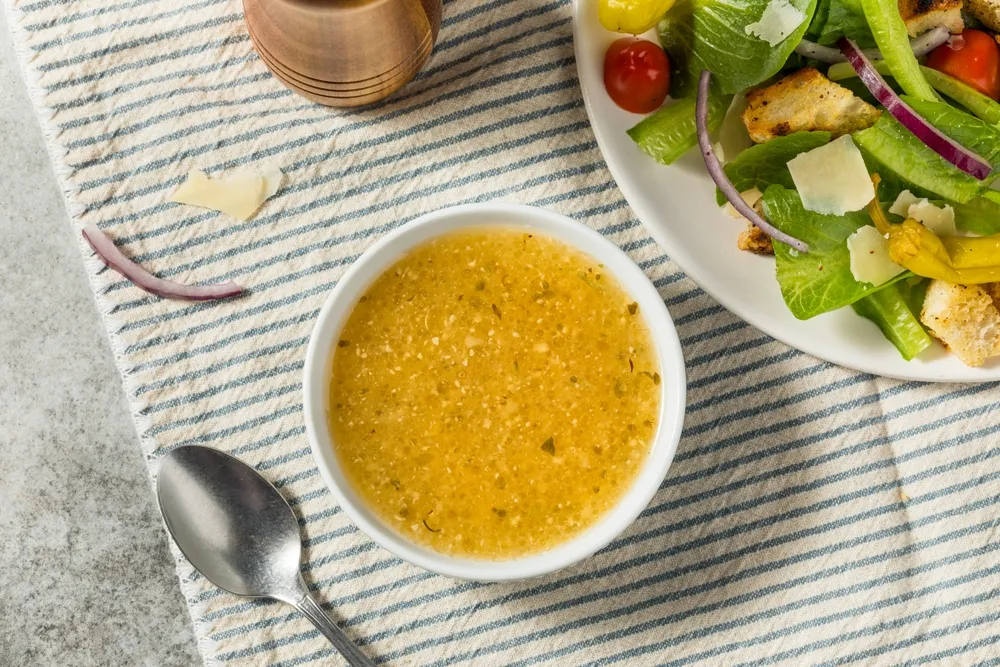
Lemon is also an ideal dressing for salads, vegetable carpaccio and thinly sliced raw vegetables, thanks to its ability to create fresh, light and aromatic accompaniments. Some effective combinations:
- fennel, lemon, extra virgin olive oil and black pepper;
- carrots, lemon, ginger and parsley;
- raw courgettes, lemon, mint and shavings of Parmesan;
- cucumbers, lemon, yoghurt and dill;
- tomatoes, lemon, basil and extra virgin olive oil;
- cabbage, lemon, oil and seeds.
To avoid the dish becoming too acidic, lemon should always be balanced with a fatty element, such as extra virgin olive oil, or with a creamy component such as yoghurt, avocado or dried fruit.
When should you add lemon at the end of cooking?
Lemon can be added either before or after cooking, depending on the desired effect. When used in a marinade, it comes into contact with the raw food, slightly altering its surface and blending with the flavours. Added at the end of cooking, however, it retains a more immediate freshness and a brighter acidic note: an ideal method when you want to preserve the lemon’s vibrant flavour.
Adding it at the end of cooking is particularly recommended for grilled fish, roast chicken, roasted vegetables, cream soups and warm salads.
Marinated lemon vs. fresh lemon: organoleptic differences
Marinated lemon has a deeper, more pronounced effect: it comes into contact with the food before cooking, blends with the flavours and helps to alter the texture and taste more evenly.
Lemon added fresh, at the end of preparation, has a more immediate and recognisable effect. It brings freshness, aromatic intensity and a cleaner sensation on the palate. It is perfect for lightening or brightening up a dish: baked fish, grilled chicken, roasted vegetables, fried foods, salads and cold dishes.
In summary: marinating for a more pronounced and integrated flavour; lemon added after cooking for a more pronounced freshness.
The most common mistakes: too much lemon, too long, no oil
Using lemon in cooking is simple, but a few small precautions make all the difference:
- Using too much lemon: the acidity should complement the food, not overpower it. This applies in particular to delicate fish, chicken and raw vegetables.
- Leaving it to marinate for too long: the fish risks becoming tough or falling apart; the chicken may change flavour and texture; the vegetables may become soft and watery.
- Forgetting the oil: a marinade made solely of lemon is too harsh. Extra virgin olive oil balances the acidity, carries the flavours and makes the dressing more harmonious.
A good starting point: 1 part lemon juice + 2 parts extra virgin olive oil + salt + herbs. This ratio can then be adjusted depending on the food being marinated.
Which lemon juice should you use for the perfect marinade?
For a balanced and flavourful result, it is important to choose a high-quality lemon juice with an authentic, clean and subtle flavour. Convenient products that still retain a fresh, natural taste really make all the difference.
Giancarlo Polenghi Limone Caraffina contains pure juice, made from Sicilian lemons, with no preservatives or added ingredients. It is therefore ideal for simple, everyday marinades for fish, chicken, vegetables and salads.
For more sophisticated dishes, Polenghi Spinagallo is an organic lemon juice made from the native Femminello Siracusano variety grown at the Spinagallo Estate in Sicily: a product that captures the authentic essence of the region, with a genuine, flavour-rich profile.
The advantage of bottled lemon juice is its convenience: it allows you to measure out the exact amount needed, always have lemon to hand, and ensure consistent results when marinating.
So, what defines a good lemon marinade?
- high-quality lemon juice;
- the right balance with oil, salt and herbs;
- timing adjusted to suit the food.
In this way, lemon becomes an ingredient that is both technical and creative: it adds fragrance, balance and depth, and brings freshness to chicken, fish and vegetables.